

One of the biggest reasons players continue returning to a game isn’t just its graphics or storyline—it’s the game loop. A well-designed game loop creates a satisfying cycle of action, progress, reward, and motivation that encourages players to keep participating.
However, creating engaging game loops is not about making games compulsive. Responsible game design focuses on keeping players interested through meaningful challenges, clear progression, fair rewards, and enjoyable experiences rather than relying on manipulative techniques.
Modern mobile gamers expect experiences that are fun, intuitive, social, and rewarding. They want games that respect their time while providing opportunities to improve their skills, connect with communities, and celebrate achievements.
Platforms like AAG (Aapka Apna Game) support this philosophy through skill-based gameplay, interactive challenges, community participation, fair play, and creator engagement through AAGVEER, creating experiences designed around player enjoyment and long-term engagement.
In this guide, we’ll explore what game loops are, why they matter, and the key factors that help create engaging and ethical gaming experiences.
Table of Contents
Quick Answer: What Is a Game Loop?
A game loop is the repeating cycle of actions that players perform while playing a game.
A simple game loop often looks like this:
- Complete a challenge.
- Receive feedback or rewards.
- Improve skills or unlock progress.
- Take on the next challenge.
When this cycle feels satisfying, players naturally choose to continue playing because each step provides a sense of progress and accomplishment.
Why Game Loops Matter
Game loops provide structure to the player experience.
Well-designed loops help players:
- Understand objectives
- Stay motivated
- Measure progress
- Learn new skills
- Explore additional features
- Participate regularly
Without a clear loop, gameplay can feel repetitive or confusing.
Understanding the Core Gameplay Loop
Every successful game has a core loop—the primary activity that players repeat throughout the experience.
A typical mobile gaming loop might involve:
- Starting a challenge
- Making strategic decisions
- Completing objectives
- Receiving rewards
- Upgrading abilities or unlocking new content
- Returning for the next challenge
The goal is to make each cycle enjoyable without becoming monotonous.
Factor 1: Clear Goals Keep Players Focused
Players are more engaged when they understand what they are trying to achieve.
Clear objectives may include:
- Completing missions
- Reaching milestones
- Improving scores
- Unlocking achievements
- Participating in community events
Well-defined goals provide direction and help players feel a sense of purpose.
Factor 2: Meaningful Progress Creates Motivation
Progress is one of the strongest motivators in gaming.
Players appreciate seeing measurable improvement through:
- Experience levels
- Achievement badges
- Skill development
- Leaderboards
- Challenge completion
- Milestone tracking
Visible progress encourages players to continue learning and improving.
Factor 3: Fair Rewards Strengthen Engagement
Rewards should feel earned rather than arbitrary.
Examples of meaningful rewards include:
- Achievement recognition
- Unlockable content
- Progress badges
- Event participation rewards
- Community recognition
Fair reward systems increase satisfaction while encouraging continued participation.
Factor 4: Balanced Challenge Maintains Interest
A game should neither feel too easy nor overwhelmingly difficult.
Balanced challenges encourage players to:
- Practice regularly
- Improve strategies
- Learn from mistakes
- Build confidence
- Experience steady growth
This balance keeps gameplay enjoyable across different skill levels.
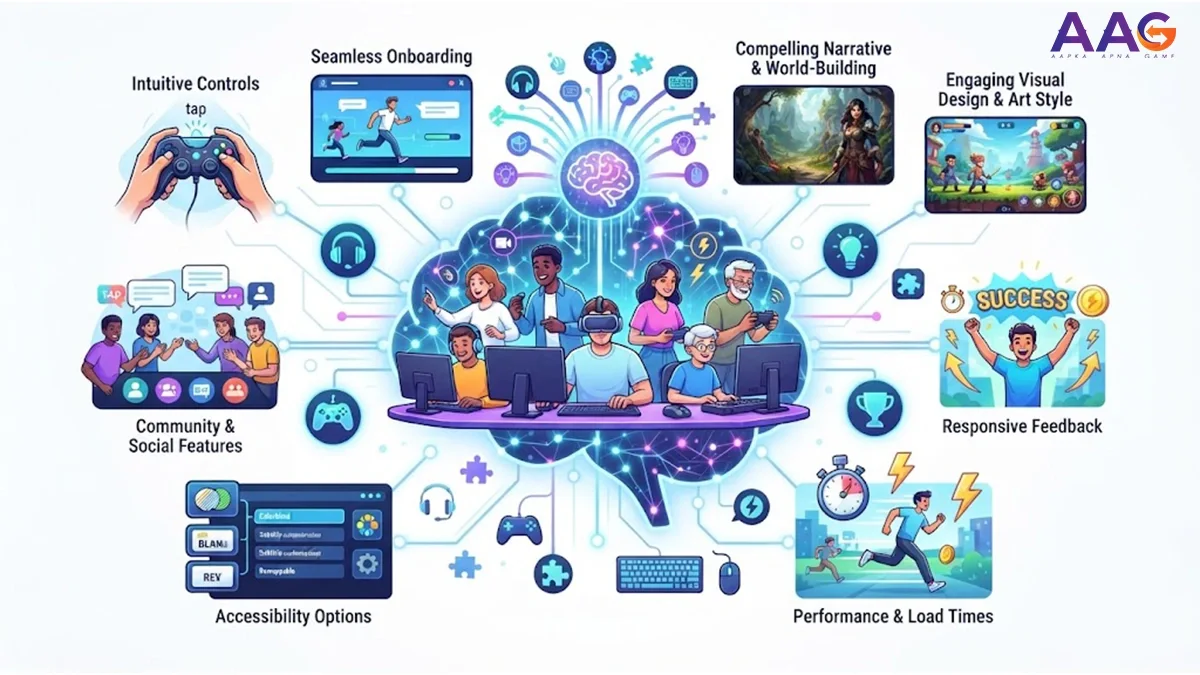
Factor 5: Immediate Feedback Improves the Experience
Players benefit from knowing how their actions affect the game.
Helpful feedback includes:
- Success animations
- Progress indicators
- Achievement notifications
- Score updates
- Completion messages
Immediate responses reinforce player actions and create a more satisfying experience.
Factor 6: Variety Prevents Repetition
Even a strong core loop can become repetitive without variation.
Developers often introduce:
- Daily challenges
- Weekly events
- Seasonal campaigns
- New objectives
- Community competitions
These additions keep gameplay fresh while encouraging regular participation.
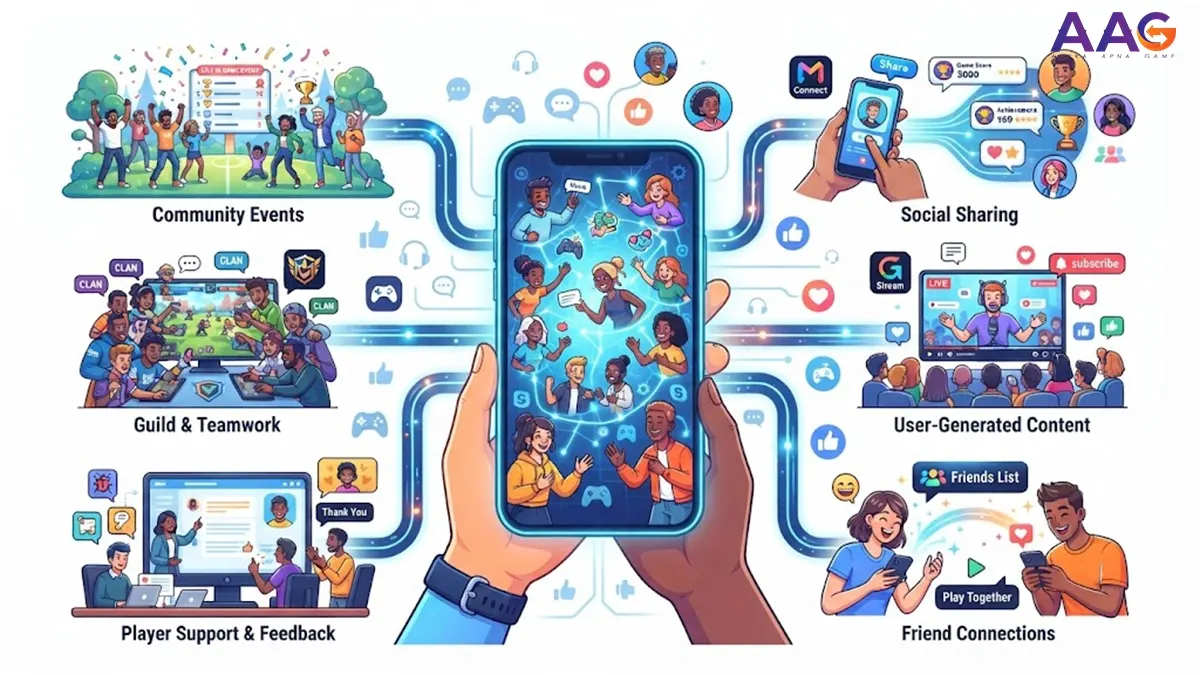
Factor 7: Social Interaction Makes Game Loops More Meaningful
Gaming has become increasingly social.
Players often enjoy loops that include opportunities to:
- Join communities
- Collaborate with teammates
- Participate in tournaments
- Share achievements
- Learn from experienced players
- Engage with creators
Community participation adds emotional value to the gameplay experience.
Designing Ethical Game Loops
Good game design encourages engagement without relying on unhealthy habits.
Ethical game loops focus on:
- Fair progression
- Transparent reward systems
- Skill development
- Positive community participation
- Respect for player choice
- Enjoyable gameplay sessions
These principles help create experiences that players return to because they enjoy them—not because they feel pressured.
How AAG Supports Engaging Player Experiences
According to the official AAG (Aapka Apna Game) platform, AAG incorporates several elements that contribute to engaging gameplay while emphasizing fair and community-focused participation.
Its ecosystem includes:
- Skill-based gaming
- Interactive challenges
- Community participation
- Fair play
- Creator engagement through AAGVEER
- A transparent virtual coin ecosystem
By combining these features, AAG encourages players to participate in meaningful gaming experiences built around improvement, interaction, and community.
Why Great Game Loops Build Strong Communities
Effective game loops do more than keep players engaged—they help create lasting communities.
When players experience:
- Fair challenges
- Visible progress
- Community recognition
- Collaborative activities
- Enjoyable gameplay
they are more likely to return, recommend the platform to friends, and contribute positively to the gaming ecosystem.
Strong game loops therefore benefit both individual players and the broader gaming community.
Factor 8: Progression Loops Give Players a Reason to Return
A progression loop builds upon the core gameplay loop by providing long-term goals and a sense of continuous improvement.
Examples include:
- Unlocking new levels
- Earning achievement badges
- Completing milestone challenges
- Improving rankings
- Gaining experience points
- Accessing new game modes
Progression systems help players feel that every session contributes to meaningful growth, making each return to the game rewarding.
Factor 9: Social Game Loops Strengthen Communities
Modern mobile gaming is increasingly community-driven. Social game loops encourage players to interact, collaborate, and celebrate achievements together.
Common social loop activities include:
- Joining community challenges
- Participating in tournaments
- Sharing gameplay highlights
- Competing on leaderboards
- Inviting friends
- Supporting creators through community events
These interactions transform gaming from an individual activity into a shared experience.
Factor 10: Personalization Makes Every Player Journey Unique
Every player has different interests and skill levels. Personalization helps tailor the gaming experience without changing the core gameplay.
Examples of personalized experiences include:
- Suggested challenges based on activity
- Recommended events
- Customized notifications
- Relevant achievement goals
- Personalized content discovery
When players receive experiences that match their interests, they are more likely to remain engaged.
Factor 11: AI Helps Improve Player Experiences
Artificial Intelligence (AI) is becoming an important tool for enhancing—not replacing—good game design.
AI can support players by:
- Recommending suitable challenges
- Helping discover new content
- Providing smarter tutorials
- Identifying appropriate difficulty levels
- Improving customer support
- Moderating community interactions
These features make gameplay smoother while helping players stay connected with the community.
Factor 12: Community Recognition Encourages Positive Participation
Recognition is a powerful motivator when it reflects genuine effort and contribution.
Communities can recognize players through:
- Achievement badges
- Event participation awards
- Leaderboard highlights
- Community shout-outs
- Creator acknowledgments
- Milestone celebrations
Celebrating progress helps players feel valued and encourages continued participation.
Factor 13: Regular Content Updates Keep Experiences Fresh
Even well-designed game loops can become repetitive over time. Regular updates introduce new goals and experiences that maintain player interest.
Examples include:
- Seasonal events
- Limited-time challenges
- New missions
- Community campaigns
- Gameplay improvements
- Feature enhancements
Consistent updates demonstrate that the platform is actively evolving alongside its community.
Factor 14: Ethical Reward Systems Build Long-Term Trust
Reward systems are most effective when they are transparent and fair.
Responsible game design emphasizes:
- Clear progression paths
- Predictable achievement systems
- Rewards based on participation or skill
- Transparent rules
- Respect for player choice
These practices help build trust between players and gaming platforms while supporting sustainable engagement.
Factor 15: Continuous Feedback Improves Game Loop Design
The best game loops evolve over time through player feedback.
Developers can improve experiences by listening to:
- Community suggestions
- Feature requests
- Gameplay feedback
- Bug reports
- Event participation trends
- User experience insights
A player-focused approach helps ensure that updates reflect real community needs rather than assumptions.
How AAG Aligns with Modern Game Loop Principles
According to the official AAG (Aapka Apna Game) platform, its approach reflects several principles of effective and community-focused game design.
The platform emphasizes:
- Skill-based gaming
- Interactive challenges
- Fair play
- Community participation
- Creator engagement through AAGVEER
- A transparent virtual coin ecosystem
These elements encourage players to improve their skills, engage with the community, and participate in meaningful gaming experiences rather than simply repeating tasks.
The Importance of Community in Long-Term Engagement
Strong game loops are even more effective when supported by an active community.
Communities provide opportunities to:
- Learn new strategies
- Celebrate achievements
- Participate in live events
- Share gameplay experiences
- Encourage beginners
- Build lasting friendships
These interactions add emotional value that extends beyond the game itself.
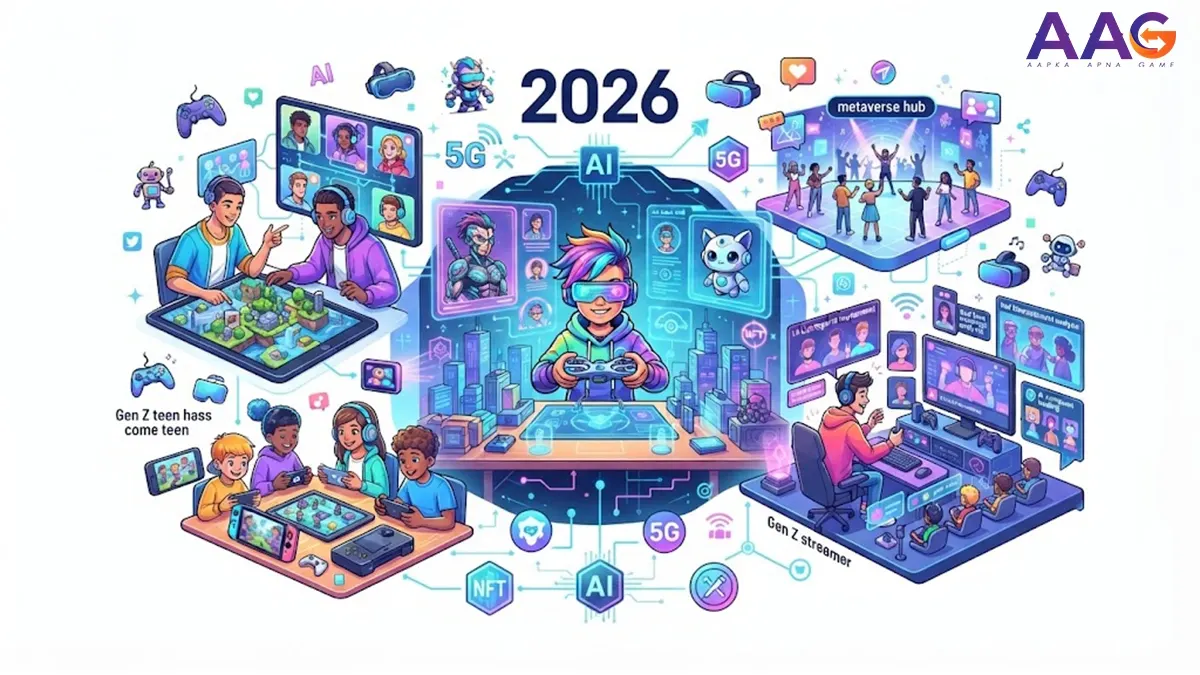
The Future of Game Loop Design
The future of mobile gaming will not be defined solely by better graphics or more complex mechanics. Instead, it will be shaped by engaging gameplay, meaningful progression, active communities, and personalized player experiences.
Modern players expect games that respect their time, reward their effort fairly, and offer opportunities to improve their skills while interacting with other players. Developers who build enjoyable and transparent game loops are more likely to create lasting relationships with their communities.
As technologies such as Artificial Intelligence (AI), cloud gaming, and creator-led communities continue to evolve, game loops will become even more adaptive, interactive, and community-focused.
The Pillars of an Engaging Game Loop
Successful mobile games generally share several core characteristics:
Clear Objectives
Players should always understand what they need to accomplish next.
Meaningful Progression
Every gaming session should contribute to long-term improvement.
Fair Rewards
Recognition should reflect player effort, skill, and participation.
Community Engagement
Players enjoy sharing experiences, learning from others, and participating in challenges together.
Continuous Variety
New events, missions, and updates help keep gameplay fresh without changing the core identity of the game.
Ethical Design
Long-term player trust is built through transparent systems, balanced gameplay, and respect for player choice.
Together, these elements create experiences that players enjoy returning to—not because they feel obligated, but because they find the gameplay rewarding and enjoyable.
Why Community Enhances Every Game Loop
A strong game loop becomes even more effective when supported by an active player community.
Communities help players:
- Discover new strategies
- Learn from experienced gamers
- Celebrate achievements
- Join tournaments
- Participate in community events
- Connect with creators
- Stay informed about updates
Community participation transforms gaming into an ongoing shared experience rather than a series of isolated sessions.
How AAG Creates Community-Driven Gaming Experiences
According to the official AAG (Aapka Apna Game) platform, AAG focuses on combining engaging gameplay with community participation.
The platform emphasizes:
- Skill-based gaming
- Fair play
- Interactive challenges
- Community participation
- Creator engagement through AAGVEER
- A transparent virtual coin ecosystem
By encouraging collaboration between players and creators, AAG supports a gaming environment where continuous improvement and positive participation remain central to the experience.
Key Takeaways
When designing engaging game loops, developers should focus on:
- Creating clear and achievable goals
- Delivering meaningful progression
- Offering transparent reward systems
- Encouraging community participation
- Supporting creator ecosystems
- Introducing regular gameplay updates
- Using AI responsibly for personalization
- Prioritizing ethical game design
- Listening to player feedback
- Building experiences that remain enjoyable over time
These principles contribute to stronger player satisfaction, healthier gaming communities, and sustainable platform growth.
Conclusion
Game loops are the foundation of every successful mobile gaming experience. They guide how players interact with a game, measure progress, receive feedback, and decide whether to continue playing.
However, the most effective game loops are those that balance challenge, progression, fairness, and community engagement. Rather than relying on repetitive mechanics alone, modern mobile games succeed by creating meaningful experiences that encourage learning, collaboration, and long-term participation.
Platforms like AAG (Aapka Apna Game) demonstrate how combining skill-based gameplay, interactive challenges, fair competition, community participation, and AAGVEER creator engagement can support engaging and responsible gaming experiences.
As the mobile gaming industry continues to grow, well-designed and ethical game loops will remain one of the most important factors in creating games that players genuinely enjoy.
Also Read: The Crucial Role of Community and Social Media in Mobile Gaming
Frequently Asked Questions: Creating Engaging Game Loops
1. What is a game loop in mobile gaming?
A game loop is the repeating sequence of actions, challenges, feedback, and progression that forms the core gameplay experience.
2. Why are game loops important?
They provide structure, maintain player engagement, and create a satisfying sense of progress.
3. What makes a game loop engaging?
Clear goals, balanced challenges, meaningful rewards, smooth feedback, progression, and community interaction.
4. What is a core gameplay loop?
The primary set of actions players repeatedly perform while playing a game.
5. What is a progression loop?
A long-term system that allows players to unlock achievements, improve skills, and reach new milestones over time.
6. How do social game loops improve gaming experiences?
They encourage collaboration, tournaments, community events, and interaction between players.
7. Can AI improve game loop design?
Yes. AI can personalize recommendations, enhance tutorials, improve matchmaking, and support community moderation.
8. Why are ethical reward systems important?
Transparent and fair rewards build trust and encourage sustainable engagement rather than relying on manipulative mechanics.
9. How does player feedback improve games?
Feedback helps developers refine gameplay, improve usability, and introduce updates that better meet community needs.
10. What role does community play in game loops?
Communities add collaboration, shared learning, recognition, and social motivation, making gameplay more meaningful.
11. What is AAG?
AAG (Aapka Apna Game) is a community-focused, skill-based gaming platform that promotes fair play, interactive challenges, and player engagement.
12. What is AAGVEER?
AAGVEER is AAG’s creator initiative that empowers creators to engage communities through gaming-related content and participation.
13. Why is mobile-first game design important?
Most gamers play on smartphones, so responsive interfaces and intuitive controls improve the overall experience.
14. Where can I learn more about AAG?
Visit the official AAG website to explore its gaming ecosystem, creator initiatives, and community features.
15. Where can I download the AAG app?
The official AAG Android app is available on the Google Play Store.
Join AAG and Experience Community-Driven Skill-Based Gaming
Great games don’t just entertain—they bring people together.
If you’re looking for a platform built around skill-based gameplay, fair competition, interactive challenges, and community participation, AAG (Aapka Apna Game) offers an engaging ecosystem designed for modern mobile gamers.
Whether you’re a casual player, a competitive gamer, or a content creator interested in the AAGVEER program, AAG provides opportunities to learn, compete, connect, and grow within an active gaming community.
Why Choose AAG?
- Skill-based mobile gaming
- Community-first experiences
- Interactive challenges and competitions
- Creator opportunities with AAGVEER
- Fair play and transparent participation
- Regular community engagement and updates
Become part of the AAG community and experience mobile gaming that values skill, interaction, and meaningful player engagement.