
Benefits of Competitive Gaming: Competitive gaming has evolved from a niche hobby into one of the fastest-growing forms of digital entertainment. Today, millions of players participate in skill-based competitions—not just to win, but to learn, improve, connect with others, and challenge themselves.
Whether it’s a strategy game, a multiplayer battle, a board game, or a community challenge, competitive gaming rewards practice, quick thinking, teamwork, and smart decision-making.
Unlike passive entertainment, competitive gaming encourages players to actively engage with challenges, adapt to changing situations, and continuously improve their performance.
Platforms like AAG (Aapka Apna Game) are helping shape this new generation of gaming by creating a community-driven environment where players can compete, participate in interactive challenges, and enjoy skill-based experiences in a fair and engaging ecosystem.
In this guide, we’ll explore the biggest benefits of competitive gaming and why it has become such an important part of modern entertainment.
Table of Contents
Quick Answer: What Are the Benefits of Competitive Gaming?
Competitive gaming offers far more than entertainment.
Some of its biggest benefits include:
- Improves strategic thinking
- Enhances decision-making
- Develops teamwork
- Strengthens communication skills
- Builds confidence
- Encourages healthy competition
- Improves adaptability
- Creates opportunities for learning
- Supports community engagement
- Helps players develop discipline
These advantages make competitive gaming appealing to casual players, students, professionals, and gaming enthusiasts alike.
What Is Competitive Gaming?
Competitive gaming involves players competing against others in games where outcomes depend primarily on skill, strategy, timing, and decision-making.
Instead of relying on chance, players improve by:
- Practicing regularly
- Learning game mechanics
- Developing strategies
- Working with teammates
- Analyzing performance
Competitive gaming can take many forms, including:
- Multiplayer strategy games
- Board games
- Quiz competitions
- Sports simulations
- Puzzle challenges
- Team-based tournaments
The common factor is that players are rewarded for improving their abilities over time.
Why Competitive Gaming Is Growing So Quickly
Several factors have contributed to the rapid growth of competitive gaming in India and around the world.
Better Internet Connectivity
High-speed mobile internet has made multiplayer gaming more accessible than ever before.
Smartphone Adoption
Powerful smartphones have brought competitive gaming into the hands of millions of users.
Community-Based Platforms
Players increasingly prefer platforms where they can interact with others rather than play alone.
Creator Influence
Gaming creators and streamers have inspired more people to participate in competitive gaming by sharing strategies, gameplay, and live events.
Continuous Innovation
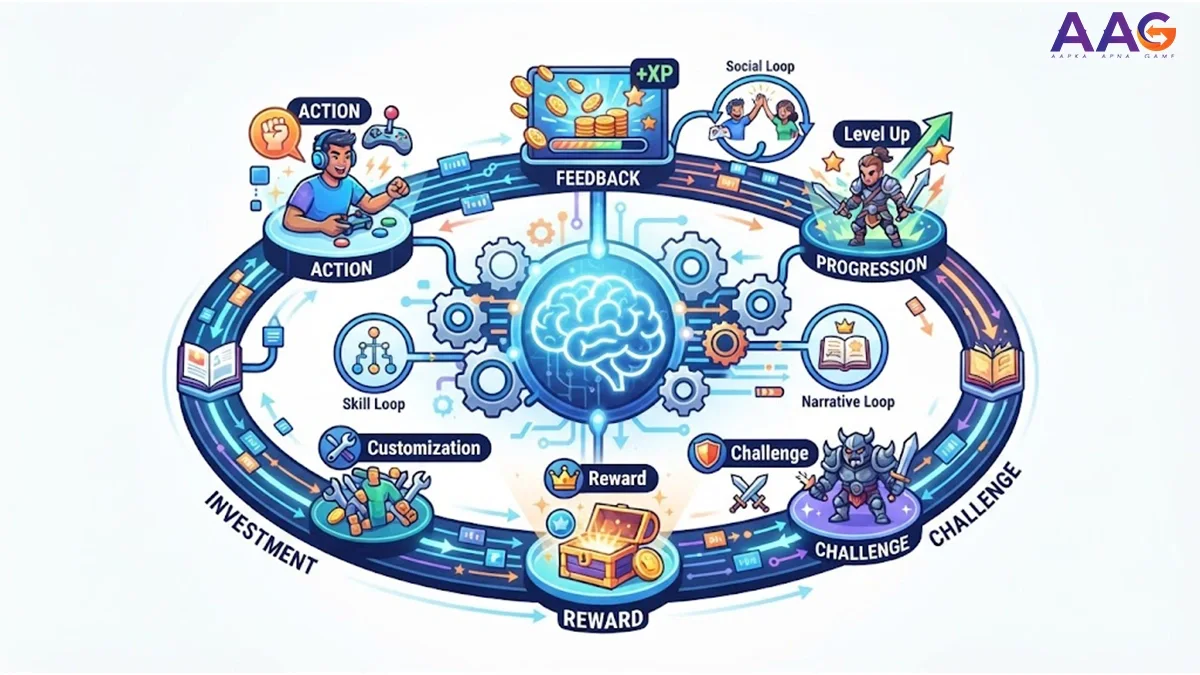
Regular updates, new challenges, and seasonal events keep players engaged and motivated to improve.
Competitive Gaming Improves Strategic Thinking
Every competitive game requires players to make decisions.
Whether you’re planning your next move, managing resources, or anticipating an opponent’s strategy, you’re constantly thinking ahead.
Over time, players develop stronger:
- Analytical thinking
- Planning skills
- Tactical awareness
- Pattern recognition
These abilities are useful not only in gaming but also in everyday problem-solving.
Also Read: How Online Gaming Communities Are Changing Entertainment
Better Decision-Making Under Pressure
Competitive games often require players to make important decisions within seconds.
Players learn to:
- Evaluate situations quickly
- Choose between multiple options
- Adapt when circumstances change
- Stay focused during high-pressure moments
The more players practice, the more confident they become in making timely decisions.
Teamwork Becomes a Natural Skill
Many competitive games involve collaboration.
Success often depends on how well teammates communicate, coordinate, and support each other.
Players develop skills such as:
- Cooperation
- Trust
- Leadership
- Active listening
- Shared responsibility
These qualities are valuable in workplaces, educational settings, and everyday life.
Communication Skills Improve
Clear communication is essential during multiplayer games.
Players regularly:
- Share strategies
- Coordinate actions
- Offer feedback
- Solve problems together
As a result, competitive gaming encourages participants to express ideas more effectively and work toward common goals.
Competitive Gaming Builds Confidence
Winning isn’t the only source of confidence.
Players also gain confidence by:
- Learning new strategies
- Solving difficult challenges
- Improving over time
- Helping teammates
- Achieving personal milestones
Every small improvement reinforces the belief that consistent practice leads to better performance.
It Encourages Continuous Learning
No matter how experienced a player becomes, there’s always something new to learn.
Competitive gamers regularly:
- Study opponents
- Watch tutorials
- Analyze gameplay
- Experiment with strategies
- Learn from mistakes
This mindset encourages curiosity and lifelong learning.
Healthy Competition Inspires Growth
Healthy competition motivates players to become better versions of themselves.
Rather than comparing themselves with others, many players focus on:
- Improving personal performance
- Learning new techniques
- Reaching higher rankings
- Completing new challenges
When competition is fair and respectful, it creates a positive environment for growth.
Platforms that emphasize fair play—such as AAG, according to its official vision—help create experiences where players are encouraged to improve through skill, participation, and community engagement rather than relying on chance.
Why Fair Play Matters
The foundation of any successful competitive gaming platform is trust.
Players want to know that:
- Rules are clear.
- Competitions are transparent.
- Skill is rewarded.
- Communities remain respectful.
- New players feel welcome.
According to the official AAG platform, its focus on skill-based competition, fair play, and community participation reflects these principles and supports a positive gaming environment.
Competitive Gaming Is More Than Winning
One of the biggest misconceptions about competitive gaming is that it’s only about victory.
In reality, the journey often matters more than the outcome.
Players enjoy:
- Learning new strategies
- Meeting like-minded gamers
- Participating in community events
- Challenging themselves
- Celebrating progress
This ongoing process keeps gaming engaging and rewarding over the long term.
Competitive Gaming Improves Adaptability
One of the biggest advantages of competitive gaming is learning how to adapt quickly.
Every match is different.
Opponents use different strategies, teammates have different playing styles, and unexpected situations arise constantly.
Players gradually learn to:
- Adjust strategies in real time
- Think creatively under pressure
- Stay flexible
- Find solutions quickly
Adaptability is a valuable skill that also applies to education, workplaces, and everyday decision-making.
It Builds Emotional Resilience
Winning feels exciting, but losing teaches valuable lessons.
Competitive gaming helps players understand that setbacks are part of improvement.
Instead of giving up, experienced players often:
- Analyze mistakes
- Practice more
- Learn new strategies
- Return stronger
This mindset develops resilience and encourages continuous personal growth.
Leadership Skills Develop Naturally
Many multiplayer games require someone to guide the team.
Players frequently take responsibility by:
- Assigning roles
- Making quick decisions
- Motivating teammates
- Managing challenges
- Coordinating actions
Over time, these experiences help develop leadership qualities that are useful far beyond gaming.
Better Focus and Concentration
Competitive gaming requires sustained attention.
Players must monitor:
- Objectives
- Opponent movements
- Time limits
- Team communication
- Changing conditions
Remaining focused throughout a match strengthens concentration and improves attention to detail.
Faster Problem-Solving Skills
Every competitive game presents unique challenges.
Players regularly solve problems by:
- Identifying obstacles
- Evaluating possible solutions
- Testing strategies
- Learning from outcomes
This habit of structured thinking can help improve analytical abilities in many real-world situations.
Digital Literacy Improves
Gaming communities expose players to modern digital tools and technologies.
Many players learn to:
- Navigate online platforms
- Communicate effectively in digital environments
- Manage profiles
- Participate in online communities
- Understand digital etiquette
These experiences contribute to stronger digital confidence.
Encourages Healthy Goal Setting
Competitive gaming naturally introduces short-term and long-term goals.
Examples include:
- Reaching a higher rank
- Improving accuracy
- Completing seasonal challenges
- Learning a new strategy
- Helping teammates achieve success
Breaking larger objectives into smaller milestones encourages consistent progress.
Inspires Creativity
Competitive gaming isn’t limited to gameplay.
Many players also express creativity by:
- Designing gaming content
- Recording videos
- Streaming gameplay
- Creating tutorials
- Building gaming communities
- Organizing events
The gaming ecosystem has expanded beyond playing to include content creation, storytelling, and community building.
The Rise of Gaming Careers
Competitive gaming has created opportunities far beyond becoming a professional player.
Today, people contribute to the gaming industry as:
- Content creators
- Live streamers
- Community managers
- Event organizers
- Commentators
- Coaches
- Game testers
- Graphic designers
- Video editors
- Social media managers
As the gaming ecosystem grows, new career paths continue to emerge.
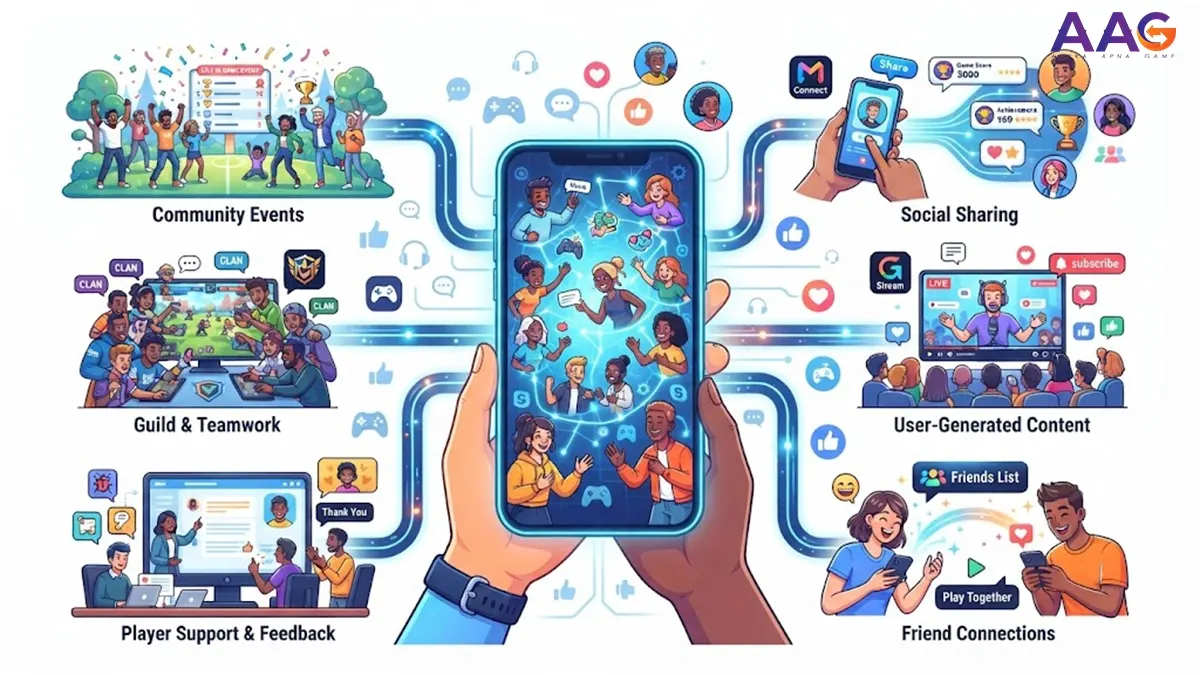
Why Community Makes Competition Better
Competition becomes more enjoyable when players feel supported by an active community.
Strong communities provide:
- Strategy discussions
- Friendly encouragement
- Shared learning
- Event participation
- Recognition
- Constructive feedback
Instead of competing in isolation, players become part of an environment where everyone has opportunities to improve together.
How AAG Encourages Healthy Competitive Gaming
Modern gamers increasingly seek platforms that combine competition with meaningful community interaction.
According to the official AAG (Aapka Apna Game) platform, AAG is built around:
- Skill-based gameplay
- Fair play
- Interactive challenges
- Community participation
- Creator engagement through AAGVEER
- A transparent virtual coin ecosystem
This approach encourages players to focus on improving their abilities while participating in a growing community of like-minded gamers.
Rather than simply completing matches, players have opportunities to engage with challenges, interact with others, and contribute to the overall community experience.
Why Fair Competition Creates Better Experiences
Healthy competition depends on trust.
Players are more likely to stay engaged when they believe:
- Rules are applied consistently.
- Competitions are transparent.
- Skill determines outcomes.
- Communities remain respectful.
- New players are welcomed.
These principles help create environments where players enjoy returning because the experience feels rewarding and inclusive.
Competitive Gaming Is Becoming More Inclusive
Competitive gaming is no longer limited to a specific age group or profession.
Today, participants include:
- Students
- Working professionals
- Entrepreneurs
- Parents
- Casual gamers
- Experienced competitors
This diversity strengthens gaming communities by bringing together people with different perspectives and experiences.
Technology Is Accelerating Growth
Several technological developments continue to improve competitive gaming experiences:
- Faster smartphones
- Better internet connectivity
- AI-assisted matchmaking
- Cross-platform compatibility
- Improved security systems
- Enhanced community features
As these technologies evolve, players can expect smoother gameplay and richer community interactions.
The Future of Competitive Gaming
Competitive gaming is no longer just a form of entertainment—it is becoming an important part of the digital economy, creator ecosystem, and online communities.
With advancements in Artificial Intelligence (AI), cloud gaming, faster mobile networks, and community-driven platforms, the future of competitive gaming looks more interactive than ever before.
In the coming years, players won’t simply compete in matches. They’ll participate in creator-led events, seasonal tournaments, personalized challenges, and AI-powered gaming experiences that continuously evolve based on player preferences.
AI Is Transforming Competitive Gaming
Artificial Intelligence is making gaming smarter and more personalized.
Modern gaming platforms are increasingly using AI to:
- Recommend games based on player interests
- Improve matchmaking
- Detect unfair behavior
- Personalize challenges
- Suggest learning resources
- Enhance player safety
This creates a better experience for beginners as well as experienced players.
Community Will Drive Long-Term Success
The biggest strength of competitive gaming is not just the gameplay—it’s the community.
Successful gaming platforms encourage players to:
- Connect with friends
- Participate in events
- Share achievements
- Learn from experienced gamers
- Celebrate milestones together
Communities create lasting engagement because players return not only for the games but also for the people they interact with.
Competitive Gaming Encourages Lifelong Learning
Every new update, challenge, or competition gives players an opportunity to improve.
Players often develop habits such as:
- Reviewing previous matches
- Learning new strategies
- Watching tutorials
- Practicing consistently
- Helping newer players
This continuous learning mindset contributes to long-term personal growth.
AAG’s Community-First Approach
As competitive gaming continues to evolve, platforms that focus on community, transparency, and skill development are becoming increasingly important.
According to the official AAG (Aapka Apna Game) website, the platform is built around:
- Skill-based competitive gaming
- Fair play
- Interactive challenges
- Community participation
- AAGVEER creator initiative
- Transparent virtual coin ecosystem
Rather than simply offering games, AAG aims to build an ecosystem where players can improve their skills, interact with fellow gamers, and participate in engaging community experiences.
This approach reflects the future of modern gaming, where communities are just as important as the games themselves.
Why Skill-Based Gaming Matters
Skill-based gaming rewards effort, learning, and consistent improvement.
Players develop valuable abilities including:
- Critical thinking
- Strategic planning
- Team collaboration
- Communication
- Leadership
- Adaptability
- Emotional resilience
These skills extend beyond gaming and can support success in academics, professional environments, and everyday life.
Key Takeaways
Competitive gaming has become much more than a hobby.
It helps players:
- Think strategically
- Solve problems
- Communicate effectively
- Build confidence
- Develop leadership qualities
- Learn continuously
- Participate in thriving communities
- Explore creator opportunities
As technology advances, community-driven platforms will continue shaping the future of digital entertainment.
Conclusion
Competitive gaming has transformed from a recreational activity into a powerful platform for learning, collaboration, and personal growth.
It encourages players to think critically, communicate effectively, adapt to challenges, and continuously improve their skills. Beyond gameplay, competitive gaming creates communities where people connect, support one another, and celebrate shared achievements.
Platforms like AAG (Aapka Apna Game) represent this new generation of gaming by combining skill-based competition, fair play, community participation, and creator engagement. Instead of simply playing games, users become part of a growing ecosystem where learning, interaction, and healthy competition go hand in hand.
As competitive gaming continues to evolve, players who embrace these opportunities will not only enjoy better entertainment but also develop valuable life skills that extend far beyond the screen.
Frequently Asked Questions (FAQs)
What is competitive gaming?
Competitive gaming involves players competing against others in games where success depends on skill, strategy, and decision-making rather than luck.
What are the main benefits of competitive gaming?
It improves strategic thinking, teamwork, communication, leadership, decision-making, confidence, and adaptability.
Does competitive gaming improve problem-solving skills?
Yes. Players regularly analyze situations, develop strategies, and make quick decisions to overcome challenges.
Can competitive gaming improve communication?
Yes. Team-based games encourage players to communicate clearly, coordinate effectively, and collaborate toward shared objectives.
Is competitive gaming suitable for beginners?
Absolutely. Most competitive gaming communities welcome beginners and provide opportunities to learn through practice and community interaction.
How does competitive gaming build confidence?
By helping players improve through practice, achieve milestones, and overcome increasingly difficult challenges.
Why is teamwork important in competitive gaming?
Many games require players to work together, share responsibilities, and support one another to achieve success.
What role does AI play in competitive gaming?
AI helps personalize experiences, improve matchmaking, enhance moderation, and recommend relevant content.
What is AAG?
AAG (Aapka Apna Game) is a community-focused, skill-based gaming platform designed to promote fair competition, interactive challenges, and player engagement.
What is AAGVEER?
AAGVEER is AAG’s creator initiative that encourages creators to build gaming communities and engage players through original content and activities.
Why is community important in competitive gaming?
Communities provide support, motivation, learning opportunities, and a sense of belonging that enhances the overall gaming experience.
Can competitive gaming create career opportunities?
Yes. Career paths include content creation, streaming, esports management, community management, coaching, event organization, and more.
Is skill-based gaming different from games of chance?
Yes. Skill-based gaming rewards player ability, strategy, and practice rather than relying primarily on random outcomes.
Where can I learn more about AAG?
Visit the official AAG website to explore its community, games, creator initiatives, and platform features.
Where can I download the AAG app?
The official AAG app is available for Android users through the Google Play Store.
Join the AAG Community Today
Competitive gaming is about more than winning—it’s about learning, improving, connecting, and becoming part of a thriving community.
If you’re looking for a platform that combines skill-based competition, fair play, interactive challenges, and a community-first gaming experience, AAG is built for you.
Why Choose AAG?
- Skill-based gaming experience
- Community-first platform
- Exciting challenges and competitions
- Creator opportunities with AAGVEER
- Fair and transparent gameplay
- Regular updates and engaging events
Official Website
Become part of India’s growing community of gamers and experience the future of skill-based gaming with AAG.